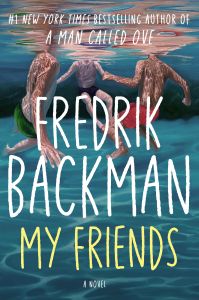
This was a book club pick for May 2026, which is when I originally read the book and wrote this review. I loved it so much I include a little homage to it in my own novel – graffiti of cockroaches in an alley.
“Art is what we leave of ourselves in other people.”
This is a deeply touching novel that is highly concerned with the power of art, and artists, to change the world – even the smallest, most singular world, the world of one – with their gifts. It follows two stories. One is that of Louisa, an overlarge, overtall girl who grew up in foster homes with her friend Fish, and it begins the day before she ages out of the system, when she has left her last foster home for good. She doesn’t know where she is going or what she will do, and she has only one goal to start with: sneak into the art gallery where her favorite painting in the world is being shown. She knows the painting from a postcard she’s had since she was small, one of only a few possessions crowded into her backpack. Looking at the painting eases something inside of her, and inspires her own art. Then she meets the artist and Ted, one of three friends featured in the image. They share with her the second story of the book – that of the painting, and the summer it was painted – the last summer of their childhoods.
The novel moves smoothly between the two stories. In the now, Louisa and Ted travel to the artist’s hometown, where the painting was made, in the first days of Louisa’s newly claimed independence – an independence that comes with no money, no home, and nothing but a passport, postcard, and sketchpad to show the world who she is. In the past, Ted recounts the adventures he shared with the artist, the group of friends the artist featured in the painting, and all the love and grief that comes of their childhoods in a deadbeat town full of indifferent, violent, or dying parents.
The small cast of characters comes alive across the two timelines. There are all the horrors of growing up as lonely, abused, or neglected children, and all the joy that comes from having a solid group of friends around you. Cycles are explored, both good and bad – violence and lovelessness, true, but also what happens when those cycles are broken, and the far more hopeful circle that is made when you find your humans, rely on their goodness, and seek it out in others, spreading it forward to new friends you make along the way. The story primes you for tragedy but ultimately offers hope. It says that art can speak to you like a friend can, help keep you alive through another day even when your life feels worthless and empty. It also says that whatever terrible things you encounter in life – and there are many to be found, around every corner – having someone in your corner is enough to turn the tide, to make a short life feel a thousand years long and bring fairy tales forth from drudgery.
It’s a beautiful novel, told with a clear and unique voice that is full of playfulness and honesty. If a book can make you tear up for a character you met a bare three chapters ago, it must be doing something right. There were many such moments while reading, where the story touched me enough to bring those tears close, but that shouldn’t give you the impression it’s a sad book. It is at times, it’s true – there is deep sadness and a lot of pain in these pages, but also camaraderie, humor, whimsy, intrigue, joy, and above all (and I said it before but it’s worth reiterating) hope. That you can find your people, and life will be better for it. That when you connect with others meaningfully, a life can turn around. That every one of us is a miracle in our own way, and by sticking together and seeking out the beauty in the world, we can find ways to keep living, and things to keep living for.


Leave a comment