Originally read and reviewed beginning of June, 2026
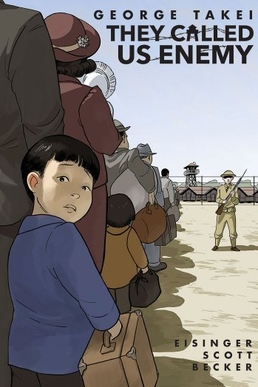
This graphic novel is the autobiographical story of George Takei’s childhood in the Japanese internment camps of World War II. It discusses, with simple yet evocative illustrations, the journey Takei’s family went through, and the broader story of the internment camps’ inception, development, and eventual disbandment. Also covered is Takei’s introduction to activism, starting with the discussions of the internment and American democracy he had as a teenager with his father, with whom he credits much of his growth as an activist.
The Japanese internment camps are a dark chapter in American history, one of many such episodes that seem to repeat with new groups every few generations. Captured Africans on plantations, American Indians on reservations, Japanese Americans in camps, and now Latin American immigrants in detention centers – we just can’t seem to learn. I’m glad Takei chose to tell his story, and in such an approachable format as a graphic novel. The more we discuss the atrocities our government committed in the past, the more we study what attitudes among the general US population emboldened lawmakers to make these decisions, the better we can learn to fight against such actions in the future.
I learned so much from this book, even though it is quite a quick read. For instance, I had no idea about the loyalty tests that were given to the interred Japanese Americans, or how the results of those loyalty tests were used to coerce those same individuals into giving up their American citizenship. I’m not surprised the government would resort to such measures to attempt to solve a problem founded in bigotry. But that lack of surprise does not make the action any less horrifying. I was pleased to hear that restitution was made to the survivors of the camps. As much as it feels like too little, too late, it does present a model of how such restitution can be applied to other marginalized groups who have been wronged by the government’s actions.
George Takei is not just a talented actor and storyteller – he is a passionate and effective activist. His long history of standing up for Japanese Americans, civil rights, and queer liberation is an inspiration, and a testament to his passion and sense of justice. This book is an honest, straight-forward, and approachable examination of a dehumanizing, brutal episode in US history. These are the sorts of stories we should all be learning, so that we, as an American collective, can work together to ensure that future generations are treated better than those of the past.


Leave a comment